
Youth had become more visible since the 1950s, but the sheer number and diversity of youth in the 1960s was overwhelming — youth culture expanded to the middle class and gained new legitimacy. The event that best highlighted the unruly, and lucrative potential of massed youth was the Beatles’ 1964 tour of Australia.
Historian, Michelle Arrow
Beatlemania visits Melbourne
In June 1964 British pop group, The Beatles, landed in Melbourne. Thousands of ‘screaming, chanting, struggling’ fans amassed at Essendon Airport to greet them. An estimated 250,000 lined the road from the airport to the city, while another 50,000 welcomed them outside their hotel, the newly-built Southern Cross Hotel in Bourke Street.
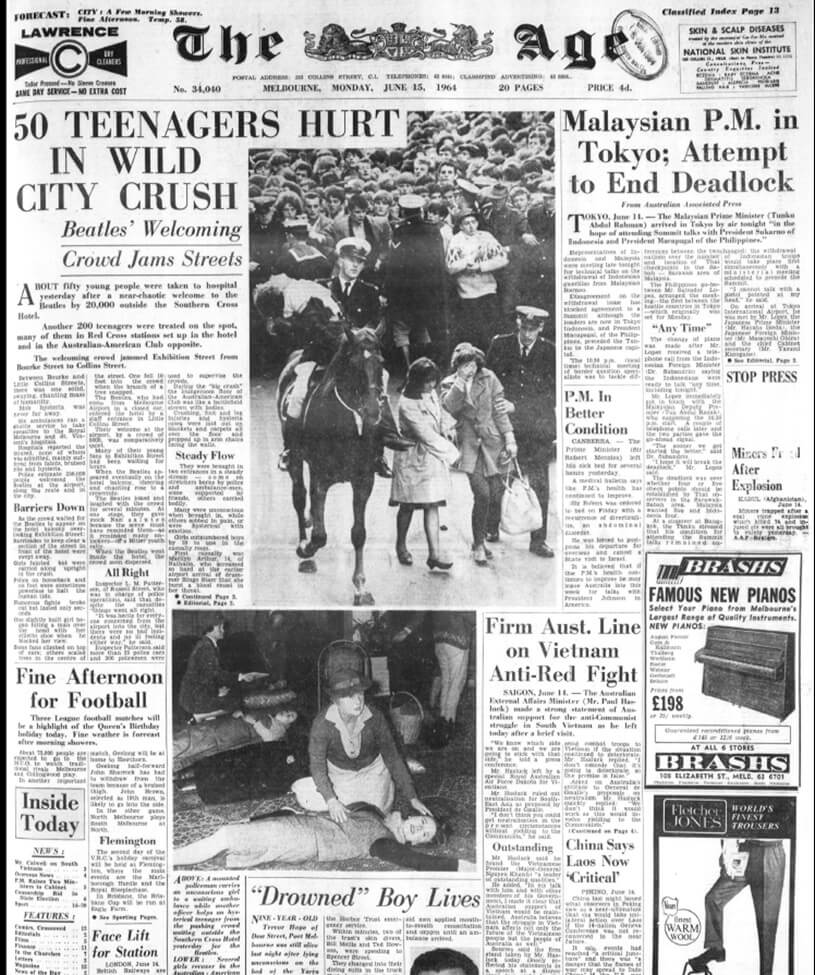
Outside Melbourne’s Southern Cross Hotel, Bourke Street, 15 June 1964
The Age newspaper
The crowds outside the Southern Cross Hotel were so huge and so unruly that mounted police were needed to control them and to rescue those who were injured in the press of people. The first casualty was Marilyn Arthur, aged 14, of Nathalia, who screamed so hard that she burst a blood vessel in her throat. As the Beatles appeared on their hotel balcony to wave, fans scrambled to get a better view: one girl began hitting a man in front over the head with her stiletto heel. Even hardened news reporters were appalled. GTV 9 reporter, Tony Charlton who was reporting from the crowd, told parents: ‘If your child is out there, you should be ashamed.’ John Lennon, speaking later at a press conference, called it ‘by far the greatest reception they had received in any part of the world’.
These scenes were repeated wherever The Beatles went, including outside the Melbourne Town Hall, where the Lord Mayor hosted a reception for them. The Beatles gave six concerts in Melbourne’s Festival Hall, but most of those who attended could barely hear the songs above the shouting and screaming of their fans. The Daily Telegraph’s article titled ‘Wild scenes at concert’, summed it up:
the girls wept, screamed, grimaced, fainted, fell over, threw things, stamped, jumped and shouted… [The Beatles] were the high priests of pop culture, taking due homage from a captive, hypnotized hysterical congregation.
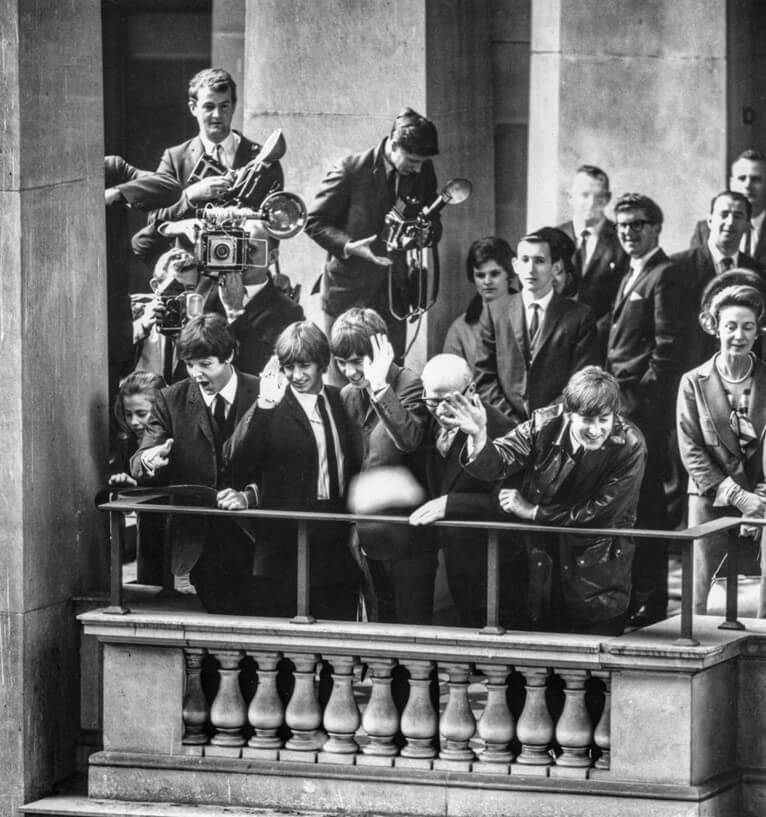
The Beatles attend a reception with the Mayor at the Town Hall in Melbourne, 16 June 1964
City of Melbourne Art and Heritage Collection
The Beatles Live at Festival Hall, Melbourne, Australia - GTV Channel 9 - 17 June 1964
The response of Melbourne’s youth to The Beatles was unprecedented. Young girls defied their parents and teachers to catch a glimpse of the pop group. Boys copied their ‘mop top’ haircuts and made-to-measure suits and dozens of Beatles-esque bands formed in their wake. For many Melburnian baby-boomers today The Beatles tour was a landmark event. This was the moment ‘their’ sixties began.
The Beatles - 1964 Australian Tour Highlights Reel
Melbourne — ‘… where all the action is man’.
In the years that followed Melbourne became a hub for Australian rock and pop. Local artists like Normie Row, John Farnham and The Strangers rose to fame, and the city was a magnet for musicians around the country, with up to forty live music gigs every week. Music tastes and sounds developed throughout the decade, influenced by new technologies, an emerging drug culture and increasing youth involvement in the political scene. Influenced by American folk and blues singers like Bob Dylan, music became the conduit for protest.
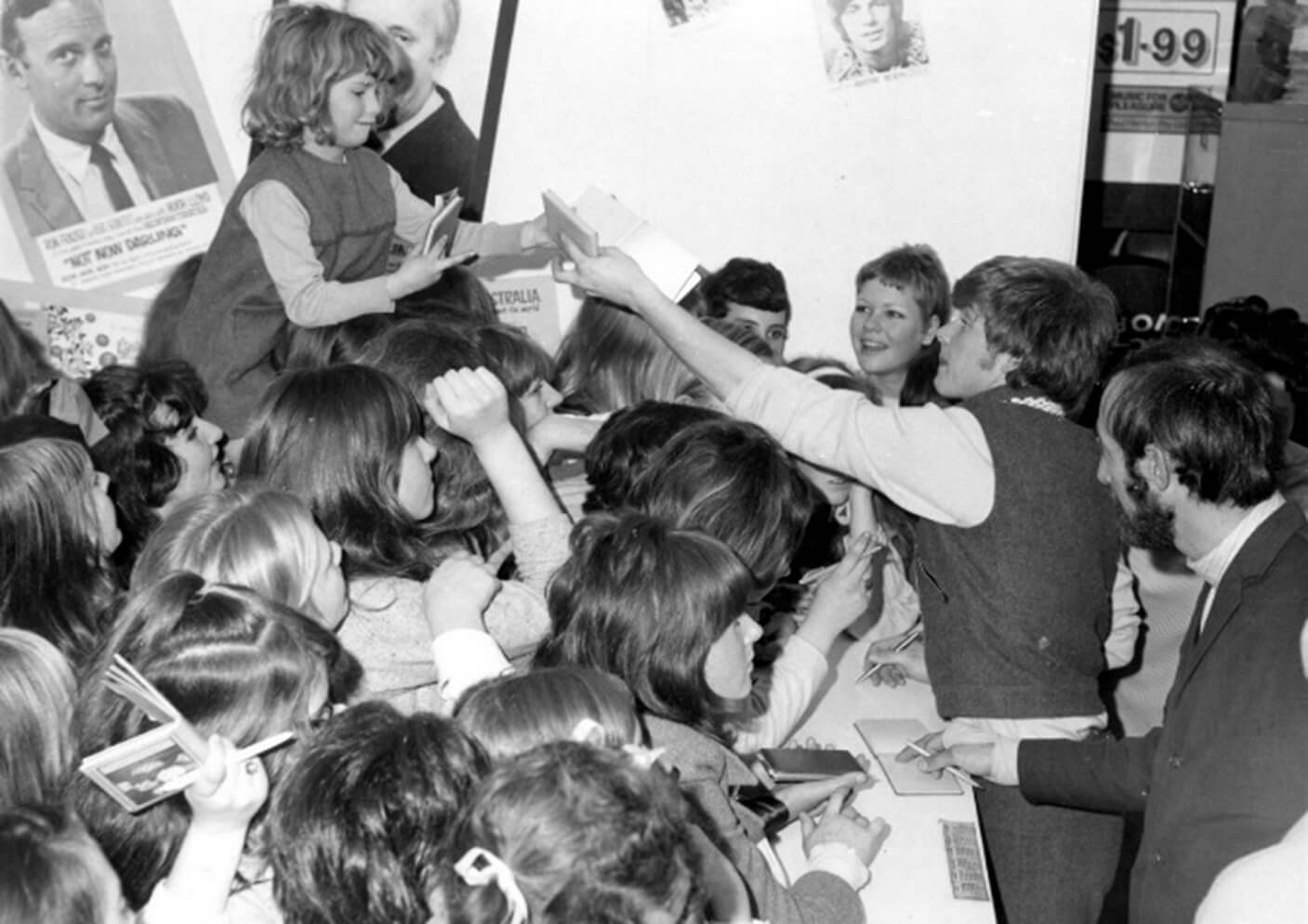
‘Johnny Farnham signing autographs for young fans’, Melbourne, 1969
State Library Victoria
John Farnham, then known as Johnny Farnham, rose to fame in the sixties as a clean-cut, pop teen idol, with hits like ‘Sadie (The Cleaning Lady)’ and ‘Raindrops Keep Fallin' on My Head.’ He was a regular on the Go!! TV show and crowned ‘King of Pop’ by TV Week for five consecutive years from 1969 to 1973.
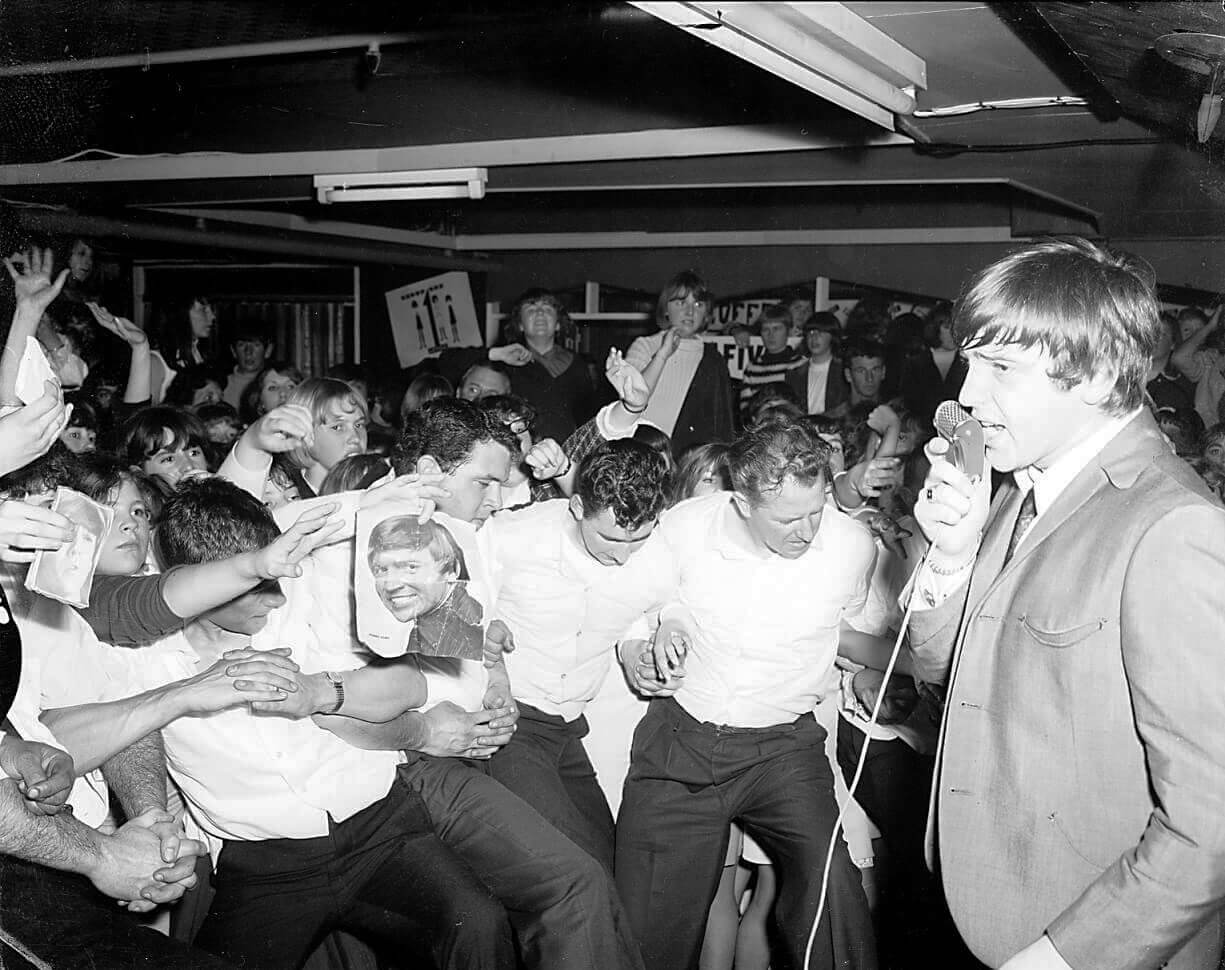
Normie Rowe on stage in Melbourne, August 1966
Australian Performing Arts Collection, Arts Centre Melbourne
Melburnian, Normie Rowe, was one of the biggest stars of Australian music, named ‘King of Pop’ by Go-Set magazine in 1967 and 1968. He was known for his energetic performances and the ‘Beatles-esque’ frenzy they created. Rowe’s singing career was cut short when he was called up for national service in late 1967. He served two years in the Australian Army, with a tour of duty in Vietnam. This was probably one of his last concerts in Melbourne before he was conscripted.
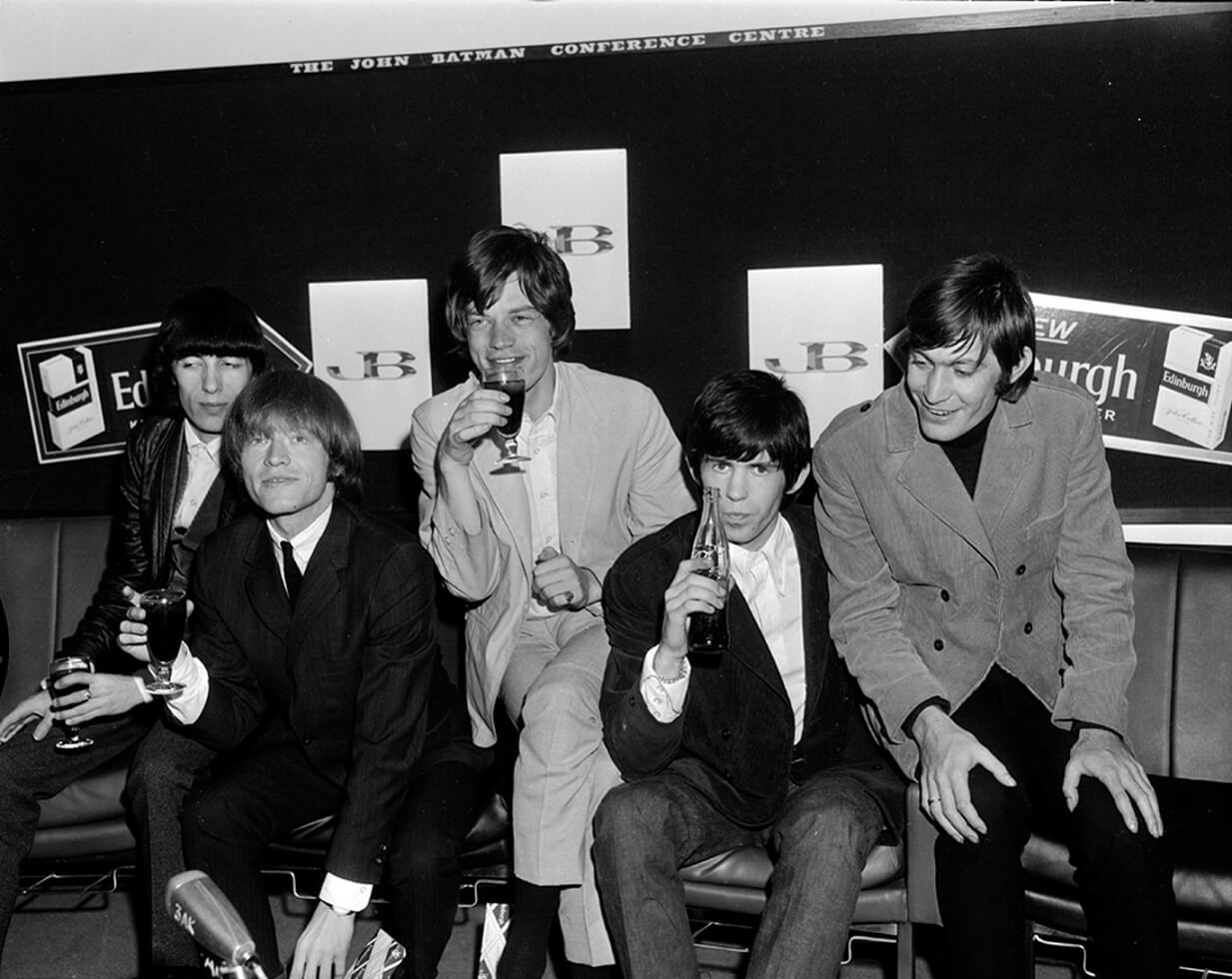
The Rolling Stones in Melbourne for their first tour, the ‘Far East Tour’, 1965
Australian Performing Arts Collection, Arts Centre Melbourne
The Rolling Stones were not as popular as The Beatles in Melbourne –– nobody was –– but they had four hits on Melbourne radio in 1964, and a further 18 between 1965 and 1969. The band first toured to Melbourne in 1965, differentiating themselves from The Beatles with their blues-based sound and more rebellious image:
Man, you could have stuck a dagger into me last Thursday week when Mick Jagger led his Rolling Stones astray right across the mighty stage of the Palais, St Kilda, in the wildest, beatiest [sic], swingiest rampage ever staged here. The zany, tangy longhairs virtually left no stone unturned to give their fans, particularly female, what they came for. When they gave out with their latest gold-award Hit, ‘19th Nervous Breakdown’, they nearly caused mass breakdowns among hysterical, wildly screaming Teenagers.
The Australian Jewish Herald, 11 March 1966
The Rolling Stones on Australia’s ‘Bandstand’, 20 February 1966
The Seekers
Unlike the Bee Gees or Billy Thorpe and the Aztecs, neither Johnnie Farnham nor Normie Rowe managed to break into the overseas market, but one Melbourne group that was spectacularly successful overseas was The Seekers.
The Seekers, Athol Guy, Bruce Woodley, Keith Potger, and singer, Judith Durham, formed in Melbourne in 1962, performing folk songs in a South Yarra coffee bar. They released their debut record, Introducing the Seekers, in 1963, but really made their name in London. The Seekers was the first Australian band to sell more than one million records worldwide. Their greatest hit, 'Georgy Girl', reached No.1 in the United States, while ‘The Carnival is Over’, sold a staggering 93,000 copies on the day of its release.
In March 1967 The Seekers performed at the Sydney Myer Music Bowl in Melbourne to a crowd estimated at 200,000 people. It set a record for the largest concert crowd in the Southern Hemisphere. Also, in 1967, the four members of The Seekers were named Australians of the Year, the only group to be given that honour. In July 1968 Judith Durham announced that she was leaving the band to pursue a solo career. When the BBC televised their final performance, more than ten million people watched it.
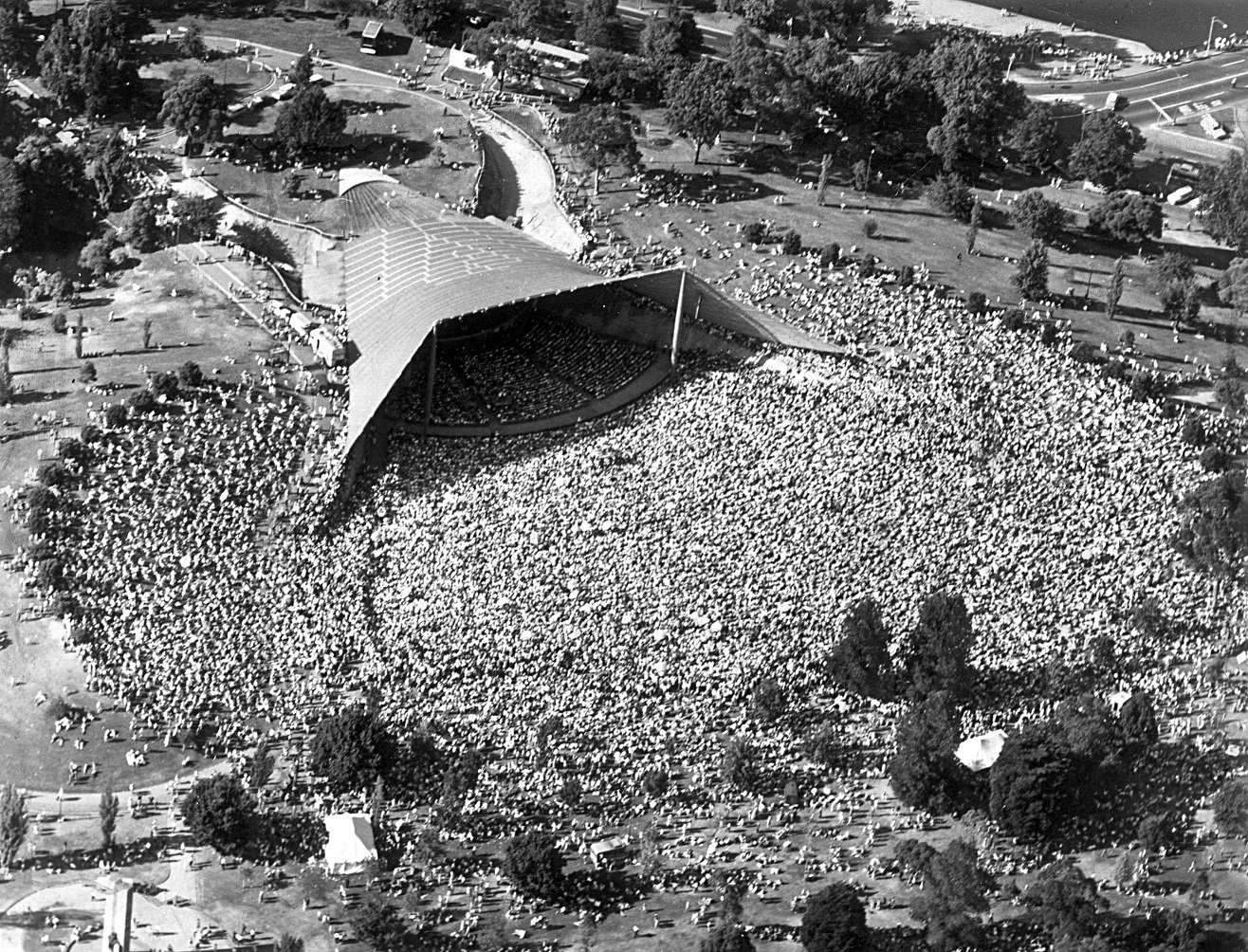

Fans at the Sidney Myer Music Bowl to watch The Seekers in March 1967.
Herald Sun
We exhibit one of Judith Durham’s dresses in the exhibition. She wore it in the film clip made to promote the song ‘Someday, one day’, produced in Sydney in 1967.
The Seekers, ‘Someday, One Day’, 1967
The Hills are Alive...
It was not all rock, pop and folk. One of the most popular musical performances in Melbourne in the mid-1960s was the Rogers & Hammerstein musical The Sound of Music. The original Australian stage production of The Sound of Music premiered in Melbourne at the Princess Theatre on 20 October 1961, produced by Garnet H. Carroll and the Australian Elizabethan Theatre Trust. It was a massive success, running for three years and starring Australian soprano June Bronhill as Maria.
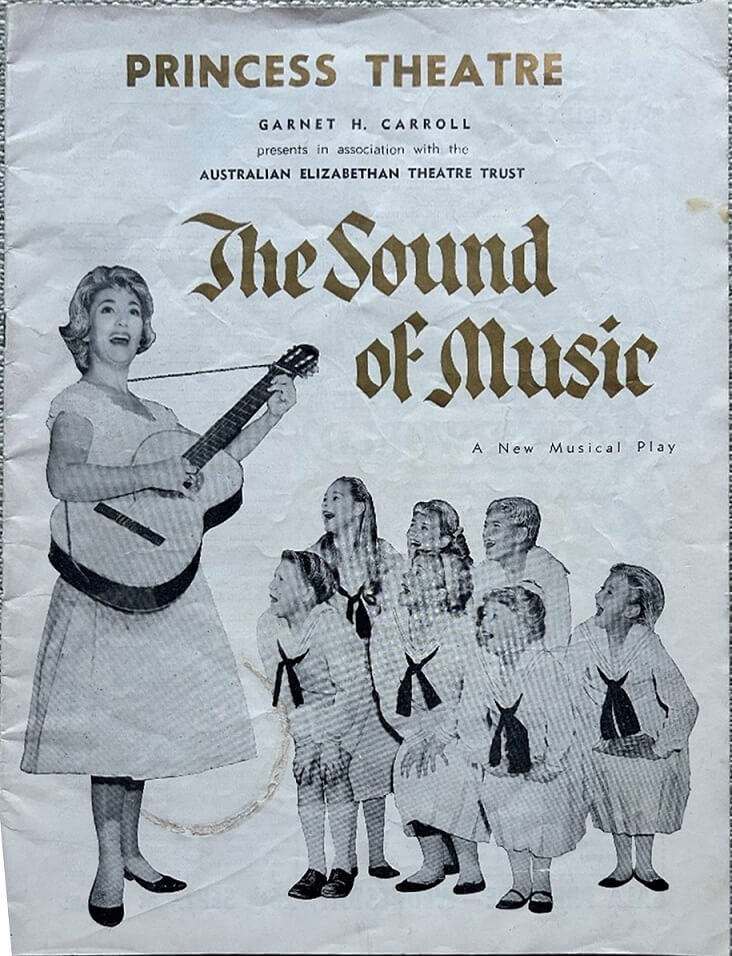
‘The Sound of Music’, theatre programme, 1961
Private collection
From 1965 the film adaptation starring Julie Andrews and Christopher Plummer captivated Victorian audiences. Many went to repeat screenings. The Sound of Music broke box office records in 29 countries worldwide, including in Australia. It was the most successful film shown in Australia in the 1960s, and that included the Beatles’ A Hard Day’s Night, released in 1964.
Out on the Town
Young swingers had their choice of dance and music venues in Melbourne. Town hall ‘clubs’ became popular from the mid-1960s. The Kew Civic Centre, for example, turned into the ‘Odd Modd Club’ on Saturday nights; St Kilda City Hall was ‘Opus Uptown’ and Frankston Mechanics Hall ‘Modville’. By the late-1960s several ‘discotheques’ operated in the city centre. Located in converted CBD buildings, bands played live music into the early hours of the morning. The two best known discotheques were the opulent (and grandly named) Prince Albert George Sebastian II (popularly known as ‘Sebastian’s’) in Exhibition Street, and Victoria and Albert’s (Bertie’s) at the corner of Spring and Flinders streets.
On opening night, the queue went all the way around to Russell Street. The police came around, and asked what was it? We said ‘discotheque’… We didn’t have any [permits], nobody knew what they were, legislation didn’t cover that sort of thing… [our clientele was] nice people, nice girls from nice schools – Daddy would drive them in and drop them off, which attracted nice boys; it was a pick-up place…
Anthony Knight, owner of Sebastian’s, quoted in Music City Melbourne, 2017
But it was the Thumpin’ Tum — seen here — that claimed to be the place for swingers: ‘Go Go to be seen at this swingin’ fruggin scene’ its advertising ran. (The ‘frug’ was an energetic dance craze in the sixties.)
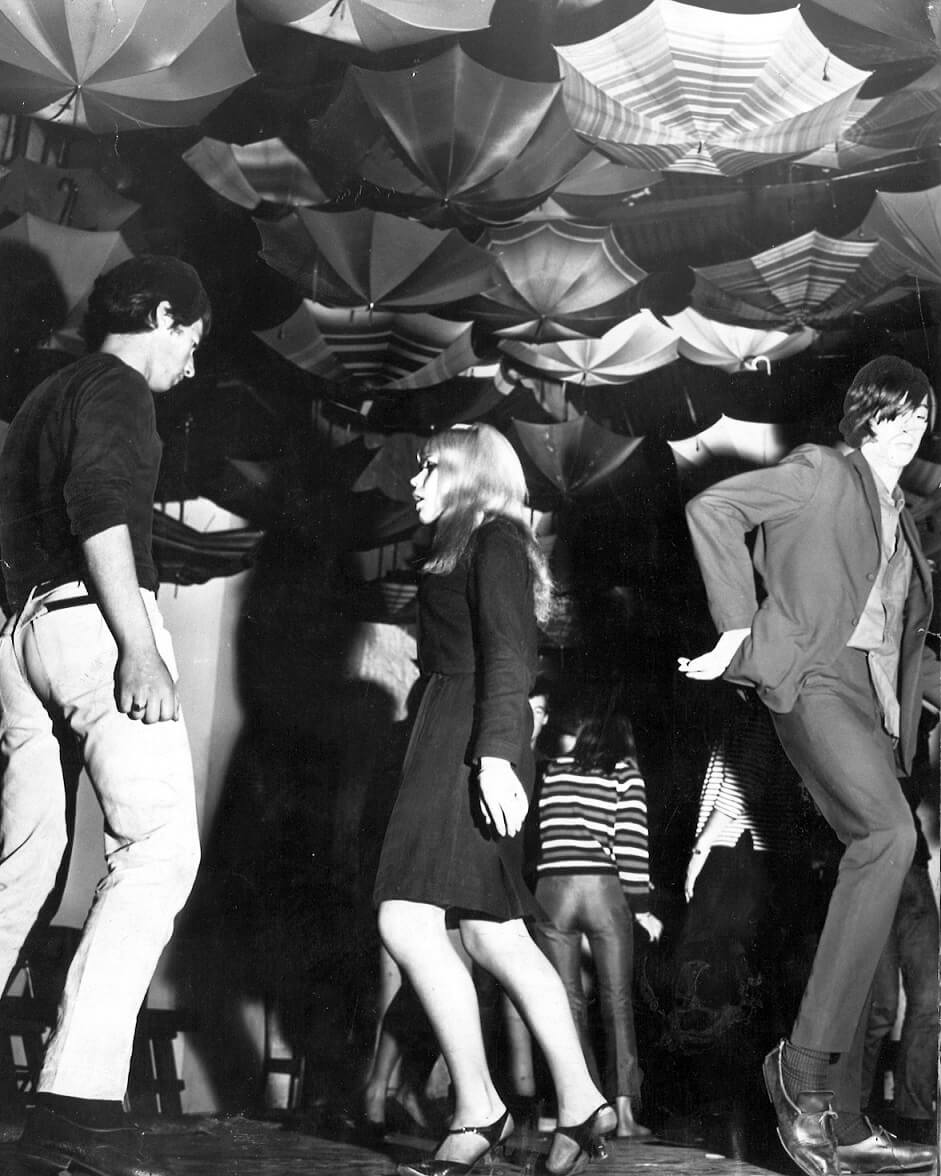
Melbourne discotheque, ‘The Thumpin’ Tum’, 1 November 1965
Newspix
Some discotheques attracted adverse publicity, sparking concerns about youth, sexuality, and ‘responsible nightlife’. Rival groups of youths, distinguished by their dress styles and music preferences, sometimes clashed outside venues, to the great concern of the press and police. Described as either Mods, or Sharpies, they also reflected class divisions, with the Sharpies more likely to be based in working class communities in inner Melbourne. (Mods tended to be from, or aspire to, a middle-class lifestyle.) Some discotheques catered exclusively to one or the other group, heightening tension between them. The Age ran this front-page story in August 1966, reporting a ‘vicious running brawl in Swanston and Bourke streets’ involving 200 Sharpies and Mods.
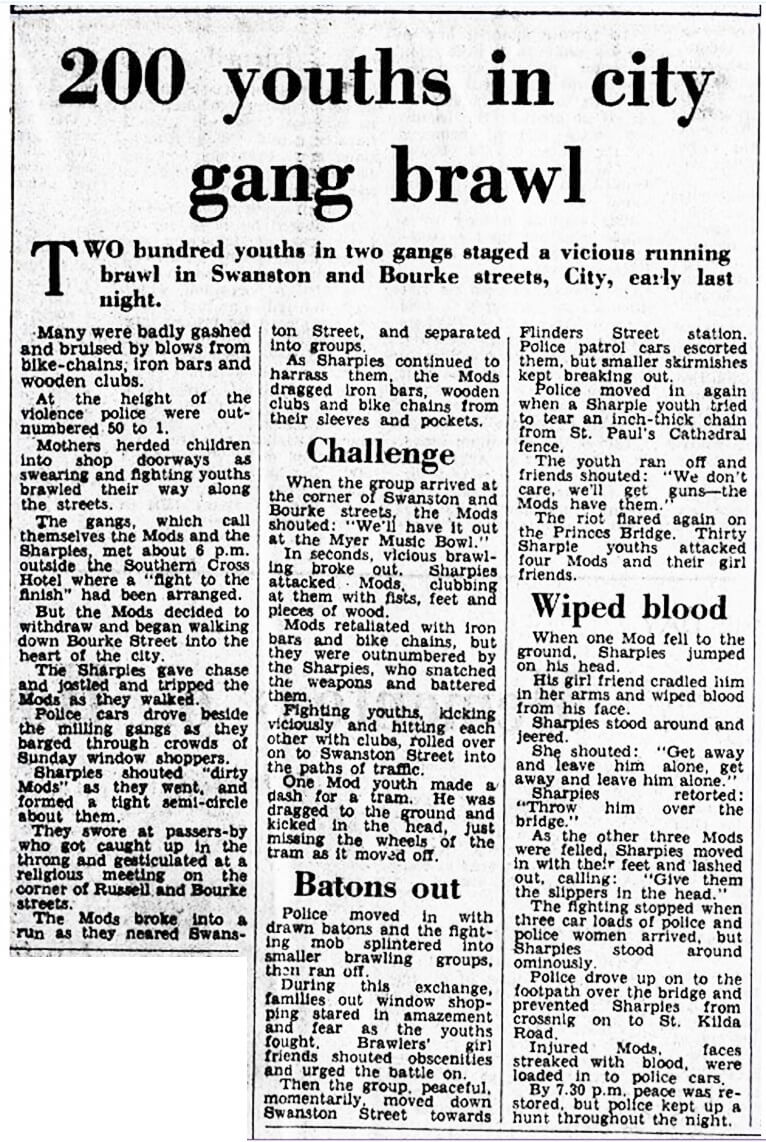
The Age, 1 August 1966
Youth Centred Media
New music media supported the growing youth culture industry in Melbourne. The TV show, Go!! — 'Australia's swingin'est teenage show' — launched in Melbourne in 1964, just a few weeks after The Beatles’ momentous tour. Unlike Channel Nine’s Bandstand, Go!! specifically targeted youth. Produced before a live audience, Go!! was hosted by Alan Field (1964), Ian Turpie (1964-66) and Johnny Young (1966-67), and sourced its on-air talent from the suburban circuits and local recording labels. The show provided a launching pad for Melbourne bands and singers — Normie Rowe, Bobby & Laurie, MPD Ltd, Merv Benton, Lynne Randell and The Strangers. It also hosted Australian music royalty like The Easybeats, Olivia Newton John, The Bee Gees, Billy Thorpe and the Aztecs, and The Twilights.
Go-set magazine was equally influential on the music scene. Go-Set launched in Melbourne in 1966 by former Monash University students Phillip Frazer, Tony Schauble and Doug Panther. Widely described as the pop music ‘bible’, it became Australia’s leading youth culture magazine — ‘the one time the oldies don’t have any say’.
We at Go-Set believe that today’s young people, deep down, think more deeply and seriously about the problems about them than many people. Perhaps more deeply than parents do … There is a great gap between the way our parents lived as young people, and the life we are trying to live today. Nowadays, we have to cope with a world where new inventions, new rules, new ideas and new problems arise every day.
Go-Set, February 1966
Go-Set was a mixture of music, gossip, fashion, and other things important to teenagers in the 1960s (and today). Go-Set introduced the city ‘gig-guide’ and featured some notable contributors. Lily Brett profiled local, national, and international bands, Molly Meldrum (then known as Ian) reported gossip and interviewed pop stars, and a young Prue Acton gave fashion advice. Ross ‘Jelly Roll’ Laird covered jazz, Chris Heeter the blues, and Mick Counihan the folk music scene.
For many teenagers Go-Set offered an entry point to youth culture. For Robert Wolfgramm, reading Go-Set ‘meant I was able to put faces to the pop names I heard nightly on the crystal set … I discovered ‘groovy’ people out there who apparently cared as much about pop music as I did. Somehow I belonged to this broader youth culture …’
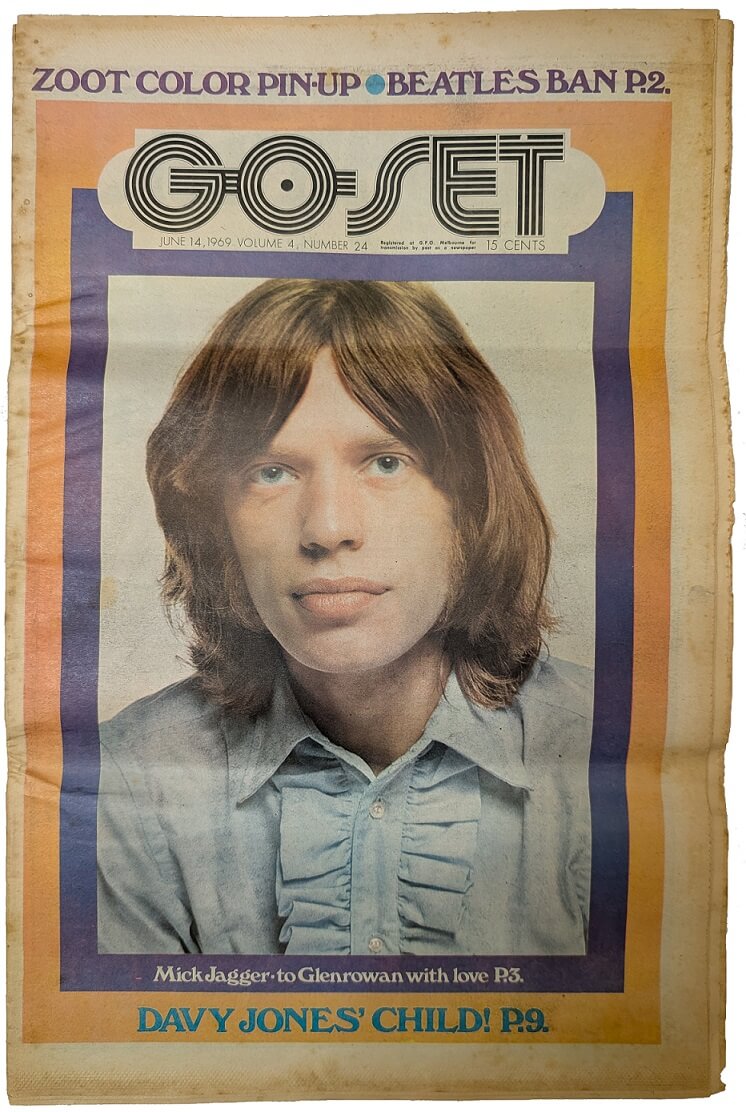
Go-Set, the weekly magazine ‘produced by the young for the young and driven by the ideas of the young’, with Mick Jagger on the cover, June 1969
Private collection
Meanwhile modern technologies allowed young people to listen to their music wherever they were. Portable radio sets, known as transistor radios (powered by batteries), were released in about 1955. They cost about £15, making them affordable during the prosperous sixties and over time their size (and hence their cost) reduced significantly. The advent of transistor radios also impacted radio broadcasting. Stations catered to a younger audience, with more music-focussed programming, and Top 40 formats.
Portable record players also became a popular form of entertainment in the sixties, allowing youth to play ‘their’ music privately, on the go, and without parental oversight. The Kingsley player on display in Swinging Sixties cost from $31 in 1967, about one week’s wage for a working man. Record players like this were designed to play 7-inch (45 RPM) records, with one or two songs per side. The 45 was cheap to produce, easy to distribute, and perfect for jukebox and radio airplay. Teens took to the portable, less expensive 45s and the local record business grew hugely in the sixties. While about three million records were manufactured in Australia in 1955–1956, by 1968 eighteen million were produced annually.
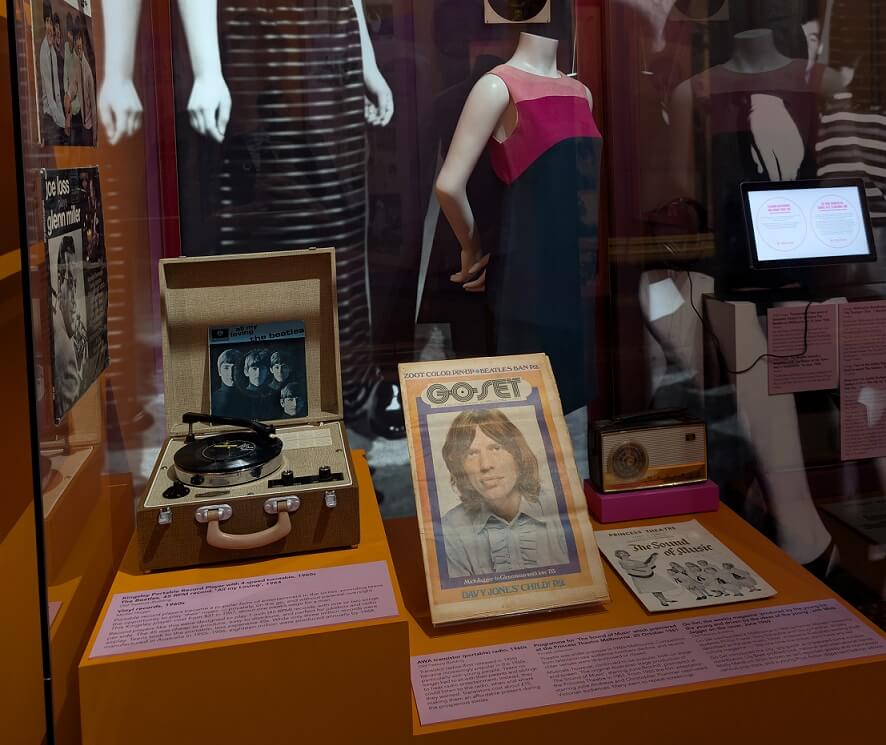
On display in Swinging Sixties, an AWA transistor (portable) radio, and Kingsley Portable Record Player with 4-speed turntable, 1960s.
Private collection
Further reading:
Daniel Nathan Charness, ‘BeatleBoomers: The Beatles in their Generation’, Thesis submitted to the faculty of Wesleyan University in partial fulfillment of the requirements for the
Degree of Bachelor of Arts with Departmental Honours in History, 2010
David Martin Kent, ‘The place of Go-Set in Rock & Pop Music Culture in Australia, 1966 to 1974’, Thesis presented for the degree of Master of Arts in Communication (Research), University of Canberra, 2002
Don Garden, Victoria: A History, Thomas Nelson Australia, Melbourne, 1984
Geoff King, ‘Becoming Yesterday: Changes in Music, the Music Industry and Musicians'
Careers in 1960s Melbourne’, RMIT University, Melbourne, Australia, published online 05 Nov 2010
Jessica Corry, ‘The Beatles and the Counterculture’, TCNJ Journal of Student Scholarship, Volume XII, April 2010
Keith Moore, ‘Roll over Beethoven’ — The Beatles’ Australian Tour’, Paper presented to the Social Change in the 21st Century Conference Centre for Social Change Research Queensland University of Technology, 22 November 2002
Lawrence Zion, ‘Disposable Icons: Pop Music in Australia 1955-63’, Popular Music, Volume 8, No. 2, May 1989
Michelle Arrow, Friday on our Minds: Popular Culture in Australia since 1945, UNSW Press, Sydney, 2009
Michelle Arrow, ‘The Beatles Tour, Australia, 1964: popular culture in a globalising world’, Teaching History, Volume 58, No. 2, 2024
Samantha Selinger-Morris, ‘Beatlemania, a love language that stands the test of time’, The Sydney Morning Herald, 4 December 2020
Seamus O’Hanlon and Tanja Luckins, Go! Melbourne: Melbourne in the Sixties, Melbourne Publishing Group Pty Ltd, Melbourne, 2005
Shane Homan & Jen Rose, ‘The Catcher: Melbourne’s 1960s discotheques and law and order, History Australia, 19:3, 2022
Tony Robinson, ‘Four Days in June: the liberation of a teenage generation’, La Trobe Journal, No. 93-94, September 2014